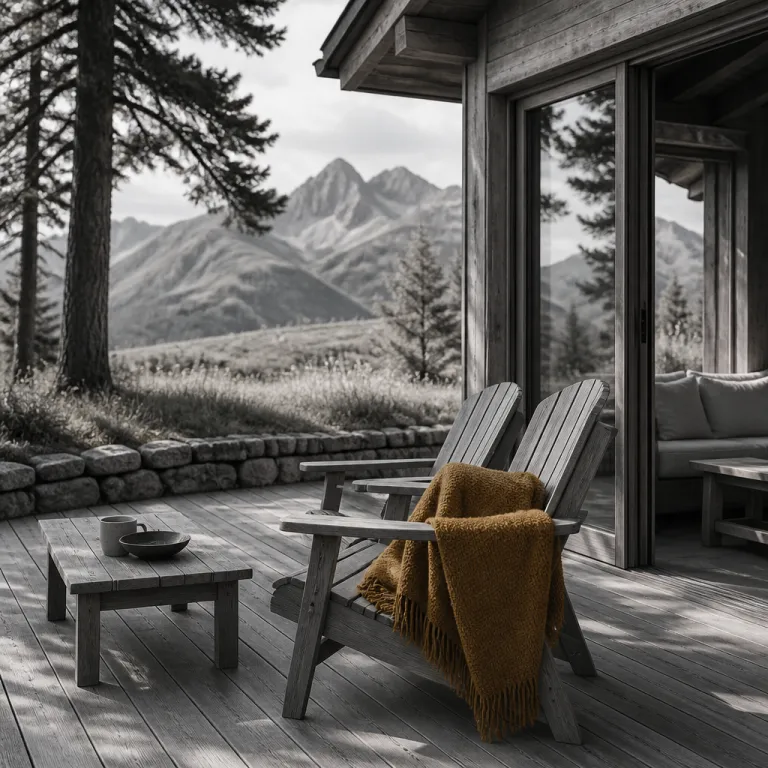
Why a luxury mountain chalet in August beats the beach
At 2,000 metres, August can feel like a different season entirely. While many coastal cities hover around 24–26 °C, long-term climate data from Météo-France and MeteoSwiss shows that average August temperatures at 2,000 metres sit closer to 14–16 °C. That 10 degree difference means you can step from your luxury mountain chalet in August straight onto the terrace without being hit by heat haze. Although ultraviolet radiation actually increases with altitude — roughly 10–12% per 1,000 metres according to the World Health Organization and MeteoSwiss UV climatology — the combination of cooler air, lower humidity and easier shade on a chalet terrace makes time outside feel both restorative and quietly indulgent when compared with a sweltering beach.
According to the UNWTO report “International Tourism Highlights 2023” (pp. 18–23) and regional figures from Atout France’s “Le Tourisme en Montagne – Bilan et Perspectives Été 2022” and “Études de fréquentation estivale en montagne 2013–2022”, summer mountain stays in the French Alps and wider Alpine arc have grown by around 15–20% over the past decade, as travellers and travel agencies steer clients away from crowded coasts toward calmer high-altitude retreats. One 2022 Atout France summary puts it plainly: “Why choose mountains over the coast in August? Cooler temperatures and fewer crowds.” That shift is reshaping what the best high-end chalet looks like in summer, from the way bedrooms and bathrooms are configured for a large family to how the living room opens to a mountain view that genuinely invites you outside.
Think of a high-altitude chalet as a private base camp for active luxury, rather than a winter-only ski property. You still want the same ski infrastructure — boot room, drying racks, even proximity to major ski resorts — because those winter chalets become ideal summer rentals with plenty of space for guests and gear. A well-designed luxury mountain property in August offers a rare balance of cool nights, long days and mountain views that feel almost private, especially once late August thins the crowds and every evening on the terrace feels like the best-kept secret in travel.
Summer altitude: air clarity, light and the new chalet rhythm
Step out from your luxury chalet at 1,800 to 2,200 metres and the first thing you notice is the light. The air is drier and cleaner than at sea level, so the mountain views appear sharper, which makes even a simple family walk from the chalet to the nearest pasture feel cinematic. Those conditions are ideal for trail running, mountain biking and glacier hikes, because the temperature stays stable enough for a long stay outside without the oppressive humidity that often ruins a coastal afternoon.
Average August days at altitude hover in the mid-teens Celsius, according to MeteoSwiss climate normals 1991–2020 (dataset “Normwerte 1991–2020, Lufttemperatur, 2000 m”) and Météo-France “Climatological Normals 1991–2020 – Mountain Stations”, which lets you use every part of the property from early morning to late night without retreating to an air-conditioned room. That means breakfast in the living room with the windows thrown open to the Alps, a late-morning via ferrata, then a soak in the hot tub while the children play in the garden of your chosen ski chalet. Long evenings are when a ski-style layout really pays off, because guests can move between the terrace, the tub and the generous bedrooms and bathrooms without ever feeling that the chalet is too large or too small for the group.
For families who usually book coastal rentals, the rhythm of a luxury mountain chalet in August feels calmer and more intimate. You still have the comfort of a curated chalet portfolio — high thread count linens in every room, a great place to read by the fire on a cooler night, and a kitchen that can handle a perfect family feast — but the focus shifts outside. To refine your packing for this kind of stay, guides such as this elegant sweater chalet wardrobe edit for top alpine chalets on how a sweater chalet wardrobe elevates your stay in top alpine chalets help you balance technical layers with relaxed, luxury-ready pieces.
From ski holiday base to August playground for active families
Winter may have built the reputation of the great ski chalets, yet August quietly reveals their full potential. When the snow melts around a luxury mountain property in Val d’Isère or across the Portes du Soleil, you gain direct access to high-altitude trails, bike parks and wildflower meadows that sit almost empty while the beaches overflow. The same ski infrastructure that supports a peak-season ski holiday — lifts, mountain restaurants, guides — now underpins a summer of glacier hikes, via ferrata routes and family-friendly mountain camps.
Look for chalets in the French Alps that sit between 1,500 and 2,200 metres, where the balance of cooler air and easy access to ski resorts turned summer hubs is at its best. A well-located luxury chalet in Val d’Isère, for example, might let a large family send teenagers off to downhill mountain biking while younger guests join nature guides for marmot spotting, all returning to a living room with plenty of space and a mountain view that frames the evening. Many of these properties were built as luxury ski chalets, so you still enjoy a hot tub on the terrace, a large dining table and flexible bedroom and bathroom layouts that can adapt to both couples and children.
Families who want a slightly softer adventure can look toward Tyrolean-style villages and curated escapes, where chalets are scaled for a perfect family of four or five rather than a corporate ski group. An elegant example is highlighted in this guide to Tyrolean village chalets for an elegant mountain escape, which shows how properties with a generous tub, a cosy living room and framed mountain views can feel both luxurious and approachable. As one recent guest put it after a week in a small Austrian village, “We thought we would miss the sea, but the cool evenings on the balcony and the empty trails at 9 a.m. were the real luxury.” The key is to treat August as your primary season, choosing rentals with outdoor fire pits, shaded terraces and direct access to trails, rather than seeing the chalet only as a winter ski base.
How to book the best August chalet: timing, layout and value
Booking strategy matters more than ever now that August in the mountains has moved from insider secret to established trend. UNWTO regional tourism updates for 2022–2023 (notably “European Tourism Trends 2022”, pp. 10–15) show a clear increase in summer mountain tourism, driven by travellers who want tranquillity, cooler temperatures and better value than the coast can offer. To secure the best high-end chalets, use advance booking for early August, then keep flexible dates for midweek arrivals in late August when crowds thin and dynamic pricing tools often release excellent value on high-end properties.
Layout is the second non-negotiable when choosing a luxury mountain chalet in August for a large family or multi-generational group. Prioritise chalets with at least one generous living room that opens to a terrace, a hot tub or a garden, because that is where guests naturally gather after a day of activity. Bedrooms and bathrooms should be configured so that parents can keep younger children close, while older guests enjoy more privacy, and every room should offer either a direct mountain view or easy access to shared spaces with mountain views.
Finally, think of your chalet stay as part of a wider portfolio of mountain experiences, not a single isolated property. Platforms such as chalet-stay.com curate luxury ski chalets, summer-ready chalets and even refined gaming-adjacent stays, as seen in this guide to elegant casino adjacent chalets for refined stays, which helps travellers compare properties by atmosphere rather than only by price. As a practical example, a family of six booking a four-bedroom chalet in the Portes du Soleil for 10–17 August might reserve in March at around €6,000–€6,500 for the week, while a comparable coastal hotel stay in a French Riviera resort for the same dates can easily reach €7,000–€8,000 for three smaller rooms. Whether you choose a ski chalet in the Portes du Soleil, a stone and timber property in Val d’Isère or a more discreet hideaway elsewhere in the Alps, the smartest August bookings now follow the same rule: skip the coast, go higher, and let the mountain do the work.
FAQ
Why choose a mountain chalet over the coast in August ?
Average August temperatures at around 2,000 metres sit close to 15 °C, roughly 10 degrees cooler than many sea-level destinations, which makes outdoor activities far more comfortable. The air is clearer, UV is less filtered and therefore stronger at altitude, and trails, lifts and villages feel calmer than crowded beaches, so a luxury mountain chalet in August offers both better sleep at night and more enjoyable days outside. Many guests now find that this combination of climate and space delivers greater value than a similarly priced coastal hotel.
What activities can families enjoy near ski resorts in summer ?
Most major ski resorts in the French Alps and wider Alps now run extensive summer programmes built around their lift networks. Families can access waymarked hiking routes, mountain biking trails, via ferrata courses, glacier walks and nature workshops led by local guides, all from the same villages that host winter ski holidays. Around a well-located chalet, that means children can join mountain camps by day, then return to a hot tub and relaxed living room each night.
Are mountain rentals more affordable than coastal stays in August ?
Pricing varies by resort and property, yet many mountain destinations still undercut top-tier coastal hotspots during peak August weeks. Because demand is spread between early, mid and late August, travellers who use flexible dates and midweek arrivals often secure luxury chalets with more bedrooms, more bathrooms and better mountain views for the same rate as a smaller coastal room. Late August in particular can offer strong value, as crowds thin while the weather remains stable.
When should I book a luxury chalet for an August stay ?
For the first half of August, it is wise to book several months in advance, especially if you need a large family layout or specific features such as a private tub or direct access to trails. Mid and late August stays can sometimes be secured closer to departure, particularly if you are open to different ski resorts within the same region and can travel midweek. Using online platforms, travel agencies and direct contact with properties allows you to compare options quickly and respond to dynamic pricing.
Is a summer chalet stay suitable for guests who do not ski ?
Absolutely, because a luxury mountain chalet in August functions more as a private lodge than a technical ski base. Non-skiers can enjoy gentle walks, spa treatments, village markets, cultural festivals and long lunches on terraces with panoramic mountain views, while more active guests head out for biking or trail running. The key is to choose properties with a comfortable living room, outdoor seating and a layout that lets every guest enjoy the mountain at their own pace.
Sources
Météo-France, “Climatological Normals 1991–2020 – Mountain Stations” (notably Val d’Isère and 2,000 m reference points); Swiss Federal Office of Meteorology and Climatology, MeteoSwiss, climate normals 1991–2020 (datasets “Normwerte 1991–2020, Lufttemperatur, 2000 m” and UV climatology summaries); World Tourism Organization (UNWTO), “International Tourism Highlights 2023”, “European Tourism Trends 2022”; Atout France, “Le Tourisme en Montagne – Bilan et Perspectives Été 2019–2023” and “Études de fréquentation estivale en montagne 2013–2022”. World Health Organization, “Global Solar UV Index: A Practical Guide”, 2002.