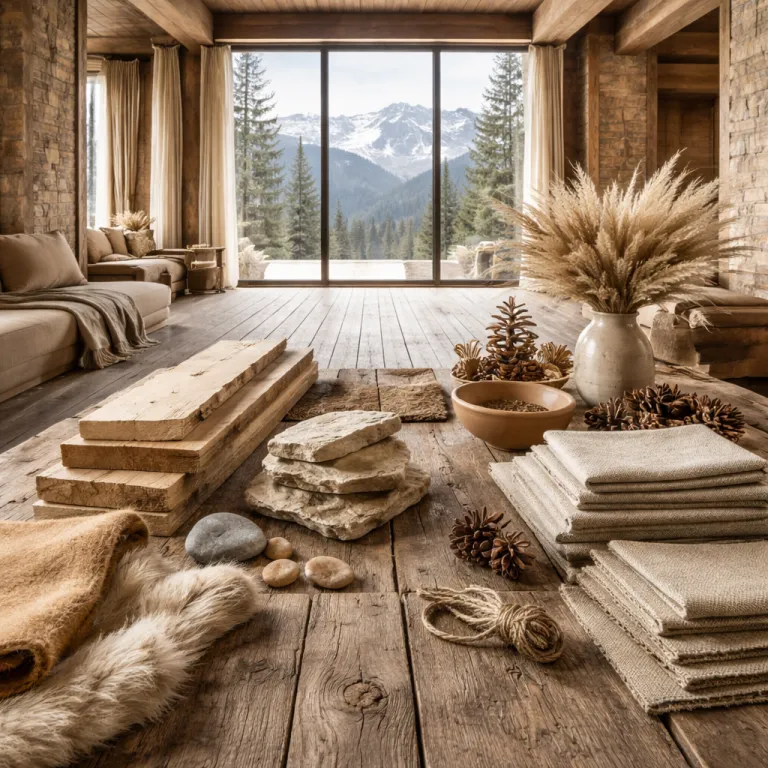
From chalet cliché to biophilic design language
The most interesting luxury chalets right now are not adding more marble bathrooms or bigger hot tubs. They are quietly rebuilding the entire design language around biophilic principles, using architecture to choreograph a deeper relationship with nature. In a biophilic design chalet, the brief is no longer just comfort and views; it is a precise, evidence-based connection to the mountain landscape.
Biophilic design means integrating natural elements and patterns into built environments to support human wellbeing. In the context of a high-altitude lodge, that built environment is often a compact building pressed against a slope, where every square metre of interior and every centimetre of natural light must work hard. The best architects treat the chalet as a calibrated nature space, where wood, stone, plants and air are not décor but performance materials.
Traditional alpine architecture relied on heavy timber, small windows and deep eaves to protect from snow and wind. A contemporary biophilic chalet still uses wood generously, yet it combines natural materials with glass, steel and high-performance insulation to open living spaces to the valley without losing heat. The result is a place where the interior design feels both sheltering and porous, with organic forms that echo the ridgelines outside.
For travellers, the shift is tangible the moment they step into the main living room. Instead of a dark house with a single picture window, you enter layered spaces where natural light moves across floors and ceilings, and where plants are integrated as structural elements rather than afterthoughts. This is architecture as wellness tool, designed to have a measurable positive impact on stress levels, sleep and even perceived luxury.
Hospitality Design has highlighted a marked rise in nature-led interiors across luxury hospitality, with industry coverage of projects such as the Six Senses Crans-Montana and the Chedi Andermatt illustrating how consistently applied biophilic strategies can lift guest satisfaction scores and length of stay. These examples are echoed by wellness-focused research summarised by the Global Wellness Institute and similar bodies, which link biophilic environments to improved mood, sleep quality and recovery after travel. Lodge owners who have recently completed biophilic projects tell a similar story: they are not talking about Instagram likes or social media metrics; they are talking about guests who rebook because the space simply feels better.
Behind these chalets is a small ecosystem of architects, landscape architects and environmental consultants who treat the mountain as collaborator. Architects lead the overall architecture and interior design, while landscape architects choreograph exterior terraces, nature-space transitions and the indoor–outdoor thresholds that define a modern lodge. Lodge owners, once focused mainly on bed count, now commission studios that can articulate clear design principles around connection to nature and air quality.
The dataset on luxury lodges shows a clear context of growing demand for sustainable, nature-connected living spaces. That demand is not abstract; it translates into specific choices of natural material, from untreated larch cladding to lime-based plasters that regulate humidity and support healthier air. When you book a biophilic design chalet, you are effectively booking a built environment that has been tuned to your nervous system as much as to the snow forecast.
Light, rhythm and the new alpine interior
Walk into a serious biophilic design chalet at dusk and you will notice the light first. Circadian lighting systems now wash ceilings and walls with tones that track alpine dawn-to-dusk cycles, shifting from cool clarity in the morning to warm amber in the evening. This choreography of natural light and artificial light is not theatrical excess; it is a direct response to research on sleep quality and jet lag at altitude.
Design studios working in Verbier, Zermatt or Niseko are increasingly treating lighting as a primary material, on par with wood or stone. They use advanced architectural software to simulate how the sun moves across the façade in winter, then carve out natural pockets where guests can read, work from a laptop or simply watch the weather. In the best projects, the office nook, the studio corner and the main living spaces all receive tailored light scenes that support different activities and circadian needs.
Indoor planting has moved far beyond a token potted fir by the fireplace. True biophilic interiors at altitude use plants as structural elements, from moss walls that stabilise humidity to trailing species that soften balustrades and double-height voids. The question for architects is practical as well as aesthetic: which plants can handle dry winter air, fluctuating temperatures and intense natural light bouncing off snowfields.
Landscape architects often collaborate with horticultural specialists to select species that thrive in this demanding nature space. Hardy ferns, certain philodendrons and alpine-inspired grasses can create a strong affinity with nature without becoming high maintenance. When these plants are integrated into staircases, mezzanines and spa areas, they turn circulation routes into living spaces rather than mere corridors.
Air quality is another frontier where biophilic design is quietly rewriting chalet norms. Mechanical ventilation with heat recovery, natural ventilation strategies and plant-based filtration systems work together to keep the indoor environment fresh, even when the building is fully occupied. For solo travellers who may use the chalet as both retreat and remote office, this combination of clean air, controlled humidity and generous natural materials can make working days feel surprisingly restorative.
Soft furnishings now echo the same design principles, with natural materials such as wool, linen and untreated leather replacing synthetics wherever possible. These materials age gracefully, absorb sound and reinforce the connection to natural textures under hand and foot. The interior becomes a coherent ecosystem, where every element from the sofa fabric to the stair handrail contributes to the overall relationship with nature.
Floral design has also evolved in parallel with biophilic architecture. Properties that take this seriously often work with specialist florists who understand both alpine ecology and interior design, curating arrangements that respond to the season rather than fighting it. If you want to understand how far this can go in practice, look at how a dedicated chalet florist can elevate a luxury mountain stay, as explored in this guide on floral design in chalets.
For travellers choosing between properties, these details matter more than another list of spa treatments. A biophilic design chalet that respects light, plants and air as primary materials will feel calm even when the weather closes in and the lifts stop. Once you have slept in such a building, returning to a dark, over-furnished lodge feels like stepping back a decade.
Beyond timber nostalgia: new alpine architecture for the solo explorer
Many chalets still trade on nostalgia, selling heavy beams and antler chandeliers as shorthand for authenticity. The new wave of biophilic design chalets takes a more rigorous view, asking how architecture can frame a genuine connection to nature for guests who travel alone and stay longer. For the solo explorer, this shift from decorative rusticity to intentional design is transformative.
Instead of one grand salon and a row of identical bedrooms, these chalets carve out a series of spaces scaled to different moods. There might be a compact reading place tucked under the eaves, a small office with a desk facing the forest, and a generous indoor–outdoor terrace where you can eat breakfast wrapped in a blanket. Each natural pocket is tuned with specific materials, light levels and views, so you can choose the relationship with nature that suits your energy that day.
Architects working in this idiom often reference the work of innovators such as Carlo Ratti, who explore how digital tools and responsive environments can support wellbeing. In a mountain context, that might mean façades with operable panels that adjust to wind and sun, or interiors where lighting and temperature adapt subtly to occupancy. The goal is not gadgetry but a built environment that behaves more like a living organism than a static building.
Studios specialising in alpine projects now talk openly about the psychological impact of their work. They reference studies showing that biophilic spaces can reduce stress, lower heart rate and improve cognitive performance, particularly when natural materials and organic forms are used consistently. For a solo traveller who may be combining ski days with remote work, this can mean sharper focus in the office corner and deeper sleep in the bedroom.
One of the most interesting shifts is how circulation is handled. Instead of long, hotel-like corridors, you move through sequences of living spaces that compress and expand, alternating intimacy and openness. A narrow stair lined with plants might open suddenly onto a double-height lounge, where a wall of glass frames the treeline and the sky beyond.
This choreography of movement and view creates a strong connection to natural rhythms. You feel the weather changing as you move through the house, from the muted light of a timber-lined spa to the bright clarity of a south-facing terrace. The relationship with nature becomes continuous rather than something you access only when you step onto the balcony.
For travellers choosing properties on chalet-stay.com, this is where reading beyond the photo gallery matters. Our guide on when the architect is the amenity, focused on design-led chalets worth the transfer, shows how a strong architectural concept can outweigh a longer drive from the airport. A biophilic design chalet with coherent design principles will often deliver more day-to-day pleasure than a larger, closer lodge built around outdated norms.
For lodge owners, the data is now hard to ignore. With a documented uplift in guest satisfaction linked to biophilic strategies in multiple hospitality and wellness reports, the ROI on better architecture and interior design is no longer a hunch. It is a measurable positive impact that shows up in reviews, repeat bookings and the quiet metric of how long guests actually stay indoors when the weather turns.
Living walls, real plants and the limits of greenwashing
As biophilic design becomes a marketing term, the risk of greenwashing in luxury chalets is real. A few planters and a moss panel do not make a biophilic design chalet, especially at altitude where plants face harsh conditions. Serious projects treat vegetation as part of the architecture, not as a decorative afterthought.
Living walls, for example, can be powerful tools when they are designed with proper irrigation, species selection and maintenance plans. In a mountain lodge, they also act as acoustic buffers and humidity regulators, contributing to both comfort and air quality. When combined with natural ventilation strategies and low-VOC natural materials, they help create a coherent ecosystem that genuinely supports wellbeing.
Guests can learn to read the difference between authentic and superficial gestures. In a well-considered chalet, you will see plants integrated into stairwells, bathrooms and transition zones, not just clustered in the lobby for photographs. The palette of materials will feel coherent, with wood, stone and textiles working together to reinforce an affinity with nature rather than competing for attention.
Biophilic design is popular in luxury lodges because it enhances guest experience by connecting them with nature. In practice, this means design that integrates natural elements into built environments in a way that feels intentional rather than cosmetic, and that improves wellbeing and reduces stress through sustained contact with nature.
Studios that specialise in this work often collaborate with environmental consultants to measure outcomes. They track indoor air quality, daylight levels and even acoustic comfort, using data to refine future projects. Over time, this feedback loop is raising the baseline for what a luxury mountain building can be.
For solo travellers, the benefit is subtle but profound. You may not consciously register the way organic forms in the stair balustrade echo the branches outside, or how the connection to nature is reinforced by sightlines that always terminate in a tree, a rock face or the sky. Yet your body responds, relaxing more quickly after travel and settling into a slower, more grounded rhythm.
The most advanced chalets now blur the indoor–outdoor boundary so thoroughly that the distinction feels almost irrelevant. Terraces become winter gardens with sheltered plants and warm materials underfoot, while interiors borrow colours and textures directly from the surrounding landscape. This is not about spectacle; it is about a quiet, continuous relationship with nature that makes the lodge feel less like a sealed box and more like an extension of the slope.
For lodge owners and designers, the message is clear. Biophilic design is no longer a niche experiment but a core expectation in the upper tier of the market, especially among independent travellers who value depth of experience over surface luxury. Those who embrace it with rigour rather than rhetoric will set the standard for what a mountain lodge can be in the decade ahead.
Key figures shaping biophilic mountain lodges
- Industry coverage in outlets such as Hospitality Design points to a substantial increase in biophilic strategies in luxury lodges over the current decade, reflecting a structural shift rather than a passing décor trend.
- Across the case studies they feature, properties that integrate robust biophilic strategies often report double-digit improvements in guest satisfaction scores, underlining the direct commercial value of investing in nature-connected design.
- Industry timelines show a marked acceleration, with early adoption in the first part of the decade, a wave of notable projects completed mid-decade and continued trend growth projected towards the end of the decade.
- Research summarised by wellness and hospitality analysts links biophilic living spaces to measurable reductions in stress markers, supporting the move towards nature-centric architecture in high-end mountain properties.
- Design trend reports on sustainable luxury accommodations highlight natural materials, living walls, natural ventilation and circadian lighting as four of the most influential features shaping next-generation alpine chalets.